The Architect's Survival Guide: What Software Engineers Do When AI Writes 100% of the Code


If you are a computer science student or a software developer reading the news right now, you are probably feeling a distinct, uncomfortable tightening in your chest.

You spend four years mastering data structures, algorithms, and the nuances of React or system-level Rust. Then, you log online to see that the latest AI models are scoring nearly 90% on the SWE-bench Verified leaderboard. They aren't just writing boilerplate anymore; they are navigating massive enterprise codebases, identifying obscure naming resolution bugs, and executing complex, multi-file refactoring without breaking the build.
The inevitable question immediately follows: If the AI can write the code, test the code, and debug the code, what exactly am I supposed to do?

Panic is the natural response, but it is the wrong one. The software engineer's role is not disappearing; it is undergoing the most aggressive evolution since the transition from assembly language to high-level programming. The job of "writing code" is being automated, but the job of "engineering software" is more critical—and more complex—than ever.
This 5,000-word survival guide is designed to navigate you through this exact transition.
What We Will Cover in This Series
To truly understand how to survive and thrive as a developer leading into 2027, we have broken this masterclass into five distinct parts:
- Part 1: The Great Abstraction (Currently Reading) – Why syntax is dead, why architecture is king, and the fundamental shift from "typist" to "orchestrator."
- Part 2: The Junior Developer's Dilemma – How to get entry-level experience when AI does entry-level work, and what companies are actually looking for in new hires.
- Part 3: Mastering System Design & "The Glue" – How to connect APIs, databases, and microservices into a cohesive product that AI cannot design on its own.
- Part 4: Managing the AI Agent – The new daily workflow: prompting, auditing AI-generated code, security assessments, and conducting code reviews for non-human developers.
- Part 5: The Human Element – Product sense, stakeholder management, and the soft skills that guarantee job security in an automated world.
Part 1: The Great Abstraction
To understand where software engineering is going, you have to understand what software engineering actually is. Historically, developers have confused the medium (code) with the value (solving business problems).
Code has never been the goal. Code is a liability. It has to be tested, maintained, and updated. Every line of code written is a potential future bug.
For the last seventy years, the history of computer science has been a relentless march toward higher levels of abstraction. We moved from punch cards to Assembly, from Assembly to C, and from C to high-level languages like Python and JavaScript. At every stage, developers panicked, claiming that "real programming" was dying. Instead, making the tools easier to use allowed us to build vastly more complex systems.
AI is simply the next compiler. It compiles human intent (plain English) into syntax (code).
The Death of the "Code Monkey"
Let's look at the reality of the 2026 job market. The role of the "Code Monkey"—a developer who simply takes a highly specific JIRA ticket, types out the corresponding CRUD (Create, Read, Update, Delete) operations, writes a basic unit test, and pushes it to GitHub—is functionally dead.
AI coding assistants have genuinely automated the repetitive, boilerplate work that used to be the training ground for junior developers. Today's agents handle:
- Scaffolding new projects and generating boilerplate code.
- Routine bug fixes and straightforward feature implementations.
- Generating documentation and summarizing code changes.
If your entire professional value is tied to your ability to remember how to center a div in CSS or write a SQL JOIN statement from memory, you are competing against a machine that works for pennies, never sleeps, and has read the documentation of every language on earth. You will lose that fight.
The Birth of the System Orchestrator
Here is what the AI cannot do.
An AI cannot sit in a meeting with a non-technical product manager, listen to a vague request about "making the checkout process feel faster," and translate that ambiguous business need into a concrete technical architecture.
An AI does not possess intuition for real-world risk. It cannot decide whether it is more cost-effective to use a NoSQL database or a relational database for a specific client's data load. It does not understand the regulatory compliance required for handling healthcare data in a specific region.
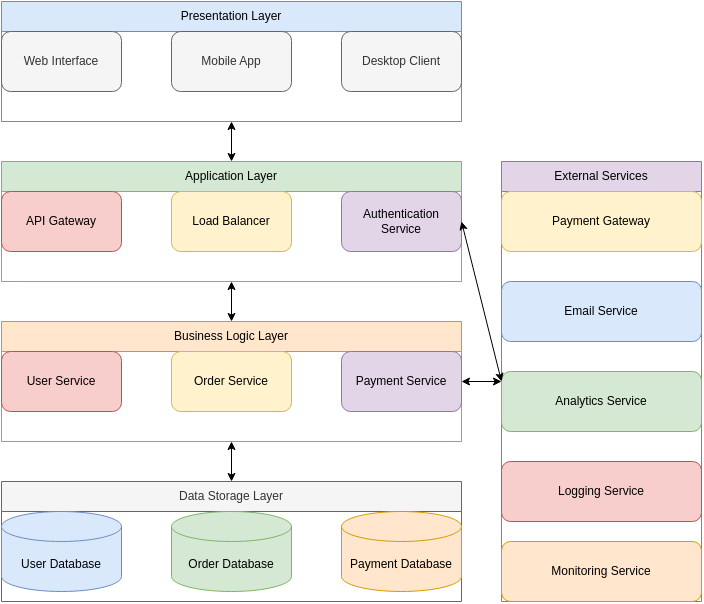
As AI takes over the micro-level implementation, the human engineer must move to the macro-level. You are no longer laying the bricks; you are designing the city grid.
The modern software engineer is a System Orchestrator. Your responsibilities now revolve around:
- System Architecture and Design: Deciding how different microservices, cloud components, and APIs communicate with each other securely and efficiently.
- Validating AI Output: Treating AI like a brilliant but reckless junior developer. You must review the code for subtle logic flaws, security vulnerabilities, and architectural drift.
- Business Logic Alignment: Ensuring that the software being built actually solves the business problem at hand, rather than just passing the unit tests.
- Complex Debugging: AI is excellent at finding syntax errors, but terrible at multi-layer system failures (e.g., a race condition between a caching layer and a database cluster).
The Bar Has Moved Up, Not Down
Many junior developers assume that because AI makes coding easier, it should be easier to get a job. The opposite is true. Because one developer paired with an AI agent can now do the work of three developers, companies expect exponentially more output.
The "entry-level" standard has permanently shifted. You are expected to deliver full-stack features, understand cloud deployment, and integrate APIs on day one. You don't have to write every line of code to do this, but you absolutely must understand how all the pieces fit together.
The successful developers of 2027 will be those who stop fiercely guarding the syntax and start embracing the systems.
Here is Part 2 of the series. We are moving from the high-level philosophy of Part 1 directly into the tactical reality of breaking into the industry right now.
The Architect's Survival Guide (Part 2): The Junior Developer's Dilemma
Let’s start with the hard truth: if you feel like the entry-level job market has vanished, you aren't imagining things.
Recent data confirms the anxiety. Since the AI boom accelerated, job postings for entry-level software engineers have dropped drastically, with some metrics showing a decline of over 70% in actual junior hiring. Research from Harvard tracking 62 million workers found that when companies adopt generative AI, their junior developer hiring drops by 9-10% within just six quarters.
The industry is currently experiencing what economists call the "Senior + AI" effect. A mid-level or senior engineer armed with tools like Claude, Cursor, or Copilot can now accomplish what previously required a small team. When a senior developer can generate a React component, write the unit tests, and scaffold the database migration in 45 seconds, the traditional economic need for a junior developer to handle those tasks evaporates.
This creates the ultimate catch-22 for the class of 2026 and 2027: You need experience to get the job, but the job that used to give you experience is now done by an algorithm.
However, the junior developer is not extinct; the role has simply been "seniorized". Companies still need a talent pipeline, but the baseline expectations have radically shifted. Here is how to navigate the dilemma, what to avoid, and exactly how to position yourself to get hired.
The Death of the "Training Task"
Historically, your first year as a software engineer was effectively a paid apprenticeship. You were handed low-risk, highly repetitive tasks to help you learn the codebase:
- Building simple CRUD (Create, Read, Update, Delete) interfaces.
- Writing boilerplate configuration.
- Fixing minor CSS bugs.
- Writing basic documentation.
Today, AI automates 60% to 80% of these specific tasks. You can no longer earn a paycheck purely by being a typist.
The Old Junior vs. The 2027 Junior
To survive, you must understand how your job description has changed.
What NOT to Do: The Traps of the AI Era
When the market gets tight, junior developers often panic and adopt strategies that actually hurt their chances. Avoid these three fatal mistakes:
- Do not build "Thin Wrappers" for your portfolio: Building a simple UI that just passes text to the OpenAI API and returns the response is no longer an impressive portfolio project. A demo that works on your local machine for one user will fall apart in production. Hiring managers see hundreds of these daily.
- Do not fall into "Tutorial Hell": Spending six months taking courses on the absolute depths of Python syntax before building anything real is a waste of time. AI can write the syntax. You need to learn how to build systems.
- Do not hide your AI usage: In interviews, pretending you write every line of code from scratch without AI assistance is a red flag. Modern engineering teams want to see that you know how to use AI efficiently. If your answer to a roadblock is "I'd just ask the model again" without understanding why the model failed, you will not be hired.
What TO Do: How to Get Hired Now
To break into the industry today, you must prove that you are a productivity multiplier, not a liability who requires constant hand-holding. Here is your actionable survival guide.
- Master the Un-Automatable Fundamentals
AI is incredible at writing a Python function, but it is remarkably bad at architectural context. You need to focus your learning on the foundational computer science concepts that dictate how systems actually run in the real world.
- Deep SQL: AI can write basic queries, but it struggles with complex joins and database performance optimization. Learn how databases actually work under the hood.
- Git Mastery: Go beyond git commit and git push. Understand rebasing, cherry-picking, and how to resolve complex, multi-file merge conflicts. AI cannot resolve a messy Git tree for you.
- API Integration and Webhooks: The modern web is entirely built on different services talking to each other. You must know how to wire real services together, handle rate limits, and manage messy, asynchronous data.
- Become an AI Auditor
Your job is no longer to write the code; it is to determine if the code the AI wrote is actually good. When building your projects, practice deterministic evaluation.
- Did the AI introduce a subtle security vulnerability (like a SQL injection vector)?
- Did it hallucinate a library that doesn't exist?
- Does the generated code handle edge cases gracefully, or will it crash if a user inputs unexpected data?
- Shift Your Portfolio Strategy
Quality now infinitely outweighs quantity. Instead of having 10 half-finished calculator apps on your GitHub, you need two or three highly polished, deployed projects that solve real business problems.
When you build a project, write an extensive README.md that explains your engineering decisions.
- Why did you choose PostgreSQL over MongoDB?
- How did you structure your authentication flow?
- What prompted you to design the database schema the way you did?
AI cannot explain the business logic and trade-offs behind a system architecture. When you articulate your decision-making process, you prove to a hiring manager that you are an engineer, not just a prompter.
- Target the Right Companies
Understand the difference in hiring philosophies right now. Startups are optimizing for immediate survival; they often cut junior roles entirely because they need engineers who can ship production-ready code on day one.
Enterprise companies (banks, healthcare, logistics, legacy tech), however, are playing a longer game. They possess massive, complex, undocumented legacy systems. They know that if they stop hiring juniors today, they will have no senior engineers in five years who actually understand how their institutional infrastructure works. Aim your applications at these stable, mid-to-large-size organizations that still value long-term talent pipelines.
The barrier to entry is higher, but the ceiling has also been raised. If you can prove that you understand how the pieces fit together, you will be vastly more valuable than a developer who only knows how to type.
Here is Part 3 of our series. Now that we understand the shifting role of the developer (Part 1) and how to navigate the entry-level bottleneck (Part 2), we are zooming into the actual technical skills you need to build scalable, modern applications.
The Architect's Survival Guide (Part 3): Mastering System Design & 'The Glue'
If you ask an AI coding assistant to write a React component for a shopping cart, it will do it flawlessly in seconds. If you ask it to write an Express.js route to create a new user, it will generate the perfect syntax.
But if you ask it to architect an entire platform—say, a quick-commerce mobile app that needs to authenticate users, process payments, track live inventory across multiple geographic zones, and push real-time delivery updates to a driver app—it will fail.
AI generates code in isolation. It writes functions, not systems.
The survival of the modern software engineer depends on mastering "The Glue"—the architecture, APIs, and data models that wire independent components into a living, breathing distributed system.
Welcome to the Distributed World
Ten years ago, a junior developer could get away with building a monolithic application: a single, massive codebase where the frontend, business logic, and database queries all lived together on one server.
Today, that approach is dead. If you are building a modern mobile application—for instance, an e-commerce platform using React Native—you are not building a monolith. You are orchestrating a distributed system.
Your architecture likely looks something like this:
- The Client: A React Native mobile app (the interface).
- The API Layer: A Node.js/Express backend (the traffic cop).
- The Database: MongoDB or PostgreSQL (the memory).
- Third-Party Services: Supabase for authentication and file storage, Stripe for payments, and Twilio for SMS notifications.
Your job is no longer just writing the code for these individual pieces. Your job is ensuring they can talk to each other without dropping data, crashing under load, or exposing security vulnerabilities.

The Three Pillars of "The Glue"
To become a System Orchestrator, you must master how data flows across network boundaries. There are three core areas you must focus your learning on immediately.
- APIs: The Messengers
APIs (Application Programming Interfaces) are how different software components communicate. You must move beyond writing basic CRUD endpoints and understand how systems communicate at scale.
- Idempotency is Non-Negotiable: Imagine a user clicks "Checkout" on your e-commerce app, but their internet drops for a second. The app retries the request. If your API is not idempotent (meaning the same request can be made multiple times without changing the result beyond the initial application), you just charged the user's credit card twice.
- Webhooks & Asynchrony: Not all actions happen instantly. If a vendor uploads a massive CSV file of new inventory to your platform, your Node backend shouldn't make the user wait while it processes. You must understand how to accept a request, hand it off to a background worker, and use Webhooks to notify the client when the job is done.
- Microservices & The API Gateway
As an application grows, a single backend becomes a bottleneck. You split the backend into "Microservices"—one server handles user authentication, another handles the product catalog, and another handles order fulfillment.
But a mobile app cannot maintain connections to a dozen different servers. This introduces the API Gateway.
Key insight: The API Gateway acts as the single entry point for all clients. It handles rate limiting, security, and routes the traffic to the correct underlying microservice, simplifying the client-side code immensely.
- Databases: The Memory (SQL vs. NoSQL)
AI will confidently write a database schema, but it doesn't know if that schema makes sense for your specific read/write patterns.
If you are building a social media feed where relationships between users are complex, a relational database (SQL) like PostgreSQL is usually best. But if you are building an operational dashboard that needs to rapidly ingest unstructured data—like real-time GPS coordinates of delivery drivers—a document-based NoSQL database like MongoDB is vastly superior for scaling.
You must understand:
- Data Duplication in Distributed Systems: In a monolith, you use SQL JOIN statements to connect a User table to an Order table. In microservices, the User service and the Order service often have completely separate databases. You have to learn how to duplicate and synchronize data across services so your app remains fast.
- Eventual Consistency: When a user updates their profile picture, it might take a few seconds for that change to propagate to all other services. Learning to design UIs that handle "eventual consistency" without confusing the user is a hallmark of a senior engineer.
What Not to Do: The Over-Engineering Trap
As you learn system architecture, the greatest danger is over-engineering.
Do not build a microservices architecture on day one for a project that has zero users. Microservices solve organizational scaling problems; they introduce massive technical complexity. If you are launching a startup, start with a modular monolith. Build your React frontend, connect it to a single Express backend, and use managed services like Supabase to handle the heavy lifting of authentication and Row Level Security (RLS).
Only break your system into microservices when a specific piece of the application (like a heavy image processing route) begins to choke the rest of the server.
Architecture is not about using the most complex tools; it is about using the right tools to build a system that is resilient, scalable, and impossible for an AI to design on its own.
The image of the "10x developer" has completely changed. In the past, it was a mythical programmer who could furiously type out perfect code late into the night. Today, the most productive engineers write remarkably little code.
Instead, they operate like a technical lead managing a team of eager, blisteringly fast, but dangerously naive junior developers (the AI agents).
In Part 4, we are breaking down the day-to-day reality of 2027 software engineering: Spec-Driven Development (SDD), the new art of prompting, and how to audit code you didn't write.
The Shift to Spec-Driven Development (SDD)
Historically, you started with a vague JIRA ticket, opened your IDE, and just started typing. Documentation and specifications were things you wrote after the code worked—if you wrote them at all.
AI has inverted this process. Welcome to Spec-Driven Development.
In SDD, the specification is no longer a dead Confluence document; it is an executable, machine-readable contract. Because AI agents can generate thousands of lines of code in seconds, pointing an agent at a problem without a rigid specification is like handing a contractor a pile of bricks and saying, "Build me a house," without providing a blueprint. You will get a structure, but the doors might open into the ceiling.
The New Daily Loop
Your daily workflow now looks like this:
- Plan Mode: You write a high-level goal (e.g., "Build a user authentication flow"). You prompt the AI in a read-only "planning mode" to draft a comprehensive Markdown specification (spec.md) detailing the database schema, API routes, edge cases, and security constraints.
- The Human Review: You do not let the AI write code yet. You review the spec.md. Does it align with the business logic? Did it hallucinate a library? You refine the spec until it is bulletproof.
- Agent Execution: You feed the locked spec back to the coding agent (like Devin, Claude Code, or Cursor) and let it generate the implementation.
- Deterministic Audit: You review the diffs, run the tests, and validate the output against the original spec.
Prompting is the New Architecture
"Prompt engineering" is often misunderstood as learning secret "magic words" to trick the AI. In reality, modern prompting is simply rigorous system design.
A weak prompt results in weak code. A strong prompt provides the exact boundaries the AI needs to succeed.
Key insight: You are no longer paid for the code you output; you are paid for the constraints you define. The AI knows how to write a database query; you must tell it which database to query, why, and what to do when it fails.
The Code Audit: Reviewing Non-Human Code
Recent industry studies show that over 60% of AI-generated code solutions contain design flaws or known security vulnerabilities, even when using state-of-the-art models.
When you review human code, you look for syntax errors or typos. When you review AI code, you must assume the syntax is perfect, but the logic is fundamentally flawed. AI models are trained on open-source codebases, which means they are optimized to give you the most statistically common answer—not the most secure one.
The AI Code Review Checklist
When auditing a pull request generated by an AI agent, you must ruthlessly check for the following:
- The "Happy Path" Bias: AI models are optimists. They write beautiful code for when everything goes right, but often completely ignore error handling, retries, and network timeouts. Did the AI include a catch block? What happens when the database goes offline?
- Security by Omission: If you ask an AI to "query the user table by ID," it might use string concatenation instead of parameterized queries, instantly introducing a SQL Injection vulnerability because you didn't explicitly forbid it.
- Phantom Dependencies (Hallucinations): AI will sometimes confidently import a library that does not exist or has been deprecated for five years. You must verify every dependency in the package.json.
- Contextual Blindness: An AI might rewrite a function perfectly, but inadvertently break a downstream service because it lacks the broader business context of why the original code was written poorly in the first place.
Your Role is the Safety Net
The fundamental rule of the AI era is this: The engineer whose name is on the commit is responsible for the code, regardless of who—or what—wrote it.
If an AI introduces a vulnerability that exposes user data, you cannot blame the AI. You are the senior developer auditing the junior agent. By mastering spec-driven development and rigorous auditing, you position yourself as the irreplaceable human in the loop—the one who ensures the automated factory actually produces a working car.
Here is Part 5, the final chapter of our series. We have covered architecture, entry-level strategies, system design, and AI management. Now, we arrive at the absolute core of your future job security: the things a machine simply cannot do.
The Architect's Survival Guide (Part 5): The Human Element
Let’s imagine it is 2028. AI coding agents have become so advanced that they no longer make syntax errors, they understand full repository context, and they can deploy directly to AWS without human intervention.
In this hypothetical future, if your only skill is translating a perfectly written JIRA ticket into code, you are obsolete.
But there is a fatal flaw in this scenario: perfectly written JIRA tickets do not exist.
Software is not built in a vacuum. It is built to solve messy, contradictory, poorly articulated human problems. The most valuable skill for a software engineer is no longer knowing how to build the software; it is figuring out what to build, and convincing other humans to let you build it.

1. Product Sense: Empathy as an Engineering Discipline
An AI can optimize a database query to run in 10 milliseconds instead of 50. But an AI cannot tell you that the user doesn't actually care about the query speed because the button they need to click is hidden behind a confusing dropdown menu.
"Product Sense" is the ability to understand the why behind the software. It is bridging the gap between the technical implementation and the user experience.
As a developer, you must cultivate product sense by asking the right questions before you or your AI agent write a single line of code:
- “Who is actually using this feature? Are they a rushed delivery driver looking at a phone in the sun, or an accountant sitting at a dual-monitor desk?”
- “If we build this feature exactly as the product manager requested, will it break an existing workflow our users rely on?”
- “Is this the simplest way to solve the user's problem, or are we over-engineering a solution?”
Engineers with strong product sense are invaluable because they prevent the company from wasting money building the wrong thing efficiently.
2. Stakeholder Management: The Art of Technical Translation
You are the bridge between the machine and the business. "Stakeholders" are the people who care about the project but do not understand the code—the CEO, the marketing team, the client, or the non-technical founders.
Your job is to manage their expectations, explain technical trade-offs, and say "no" without actually saying the word "no."

How to Communicate Like a Senior Engineer
AI cannot sit in a boardroom and explain why a feature is delayed. You must master the art of the Technical Translation.
- Bad Communication: "We can't launch on Tuesday because the AI hallucinated a circular dependency in the React Native navigation stack, and the Supabase realtime listener is failing on Android build SDK 34." (The stakeholder hears: "The engineer broke it and is making excuses.")
- Good Communication: "During final testing, we found an issue where Android users were getting stuck on the loading screen. We need two extra days to stabilize the navigation so our users have a smooth experience on launch day." (The stakeholder hears: "The engineer is protecting our users and has a plan.")
You must also learn how to negotiate scope. When a client asks for a complex machine-learning recommendation engine on a tight budget, you don't just say it's impossible. You offer a strategic alternative: "Building a custom ML engine will take three months. However, if we use a tag-based filtering system, we can deliver 80% of the value by next week. Shall we start there?"
3. The "Glue" Developer
In the AI era, the most highly compensated engineers are the "Glue."
Glue engineers don't necessarily write the most brilliant algorithms, but they make the entire team run faster.
- They notice that the marketing team is manually exporting CSVs from the database every Friday, so they spend an hour building a script to automate it.
- They realize the junior developers are struggling with the AI prompts, so they create a standardized prompt template for the team.
- They run interference when the CEO tries to change the roadmap in the middle of a sprint.
AI can write the software. It cannot be the glue that holds a development team together.
Conclusion: You Are Not a Typist
We began this series with a question: What does a software engineer do when AI writes all the code?
The answer is that the software engineer finally gets to do the actual engineering.
If you are a final-year CS student or a junior developer, stop defining your worth by your ability to remember syntax. You are entering the industry at a moment of profound leverage. You have tools at your disposal that entire departments did not have ten years ago.
Your job is to design resilient systems, audit automated logic, translate business needs into technical realities, and build products that solve real human problems.
The code is just the byproduct. You are the Architect. Now, go build the city.
Have thoughts or questions on this topic?
Follow and discuss with our engineering team on X / Twitter for daily tech breakdowns, system design notes, and software engineering debates.
Related Articles

Your Phone Was Always a Better Remote Control . NEXORA Just Made It Feel Like One
I never noticed how frequently I reached for the mouse until I began keeping count. Lean in, click, lean back, open a tab, skip a track, type six words—and repeat the loop dozens of times an hour. The
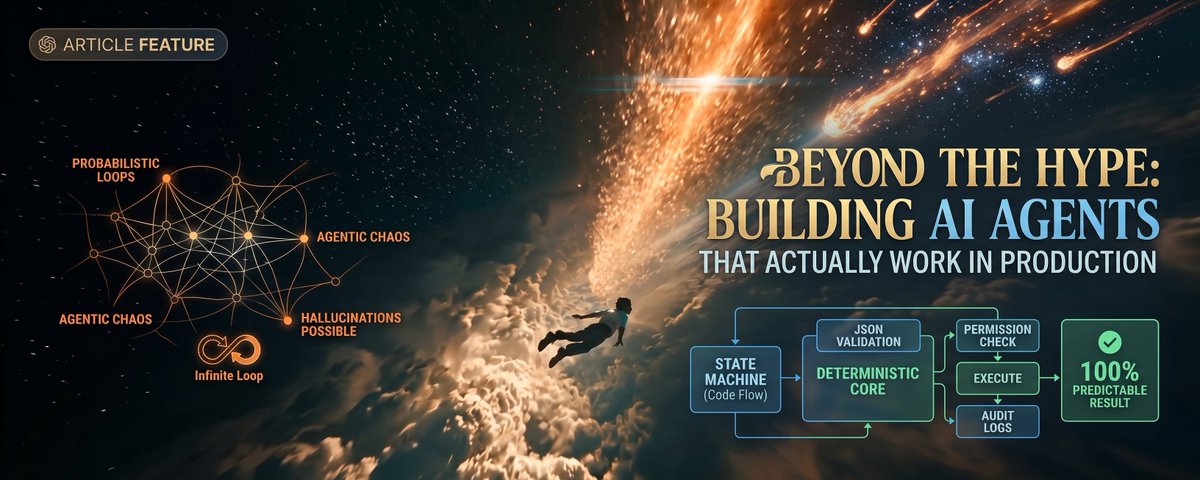
Beyond the Hype: Building AI Agents That Actually Work in Production
We’ve all seen the magical AI demos. You type a vague prompt into a chat box, and a few seconds later, an "autonomous agent" writes a marketing plan, codes a website, and emails a client. It looks

Out of a quiet obsession, we built a beast. 60+ heavy utilities, handed freely to the web.
A few months ago, Launch Your Concept released a beast. 60+ massive utilities operating entirely off the grid.. Inside the engineering madness that built FlashTools. We were tired of the web feeling